September Pest Entry Check for LBI Region Homes
Mid-September is a smart time for homeowners across Long Beach Island and the nearby mainland to check where pests may be getting into the house. A September pest entry check is especially useful here because local homes deal with salt air, wind, sand, humidity, seasonal use, crawlspaces, garages, outdoor showers, and openings around decks and utility lines.
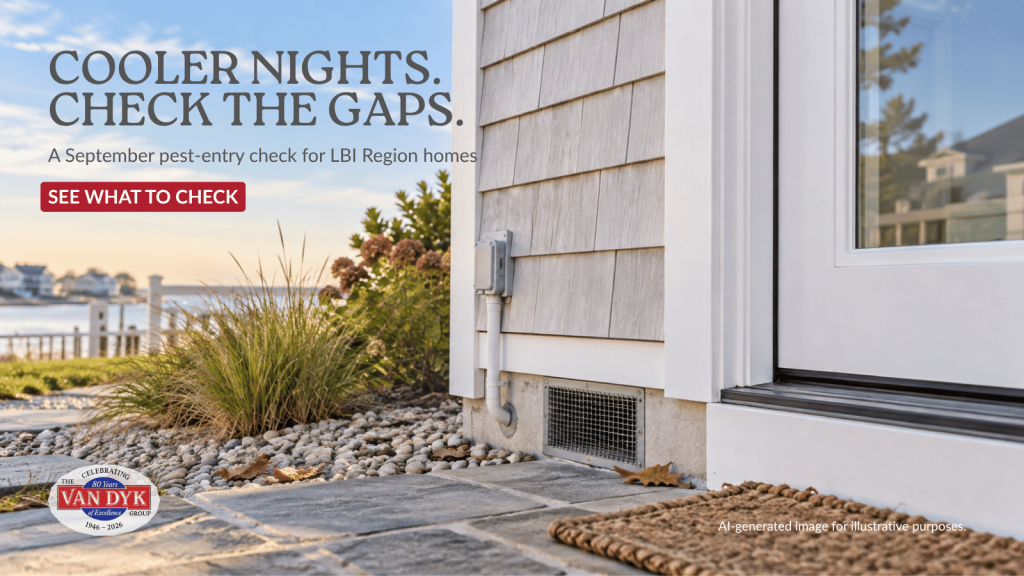
September is a good time to check doors, vents, utility openings and under-house areas for signs that pests may be finding a way inside.
September also brings a few familiar pests. House mice and other rodents look for food and shelter around garages, crawlspaces, sheds, storage areas, and utility openings. Brown marmorated stink bugs begin seeking protected places to overwinter, which can put screens, window frames, vents, and door gaps on their route indoors. Camel crickets favor dark, damp spaces and may show up in basements, crawlspaces, garages, and storage areas. Spiders often gather where other insects are active, especially around lights, screens, porches, and corners.
On Long Beach Island, start underneath the house. Many homes are elevated, so inspect around pilings, enclosed storage, outdoor shower plumbing, HVAC lines, hose bibs, cable entries, crawlspace vents, and any place pipes or wires pass through walls or floors. Check sliders, porch doors, deck connections, soffits, vents, and siding penetrations. Wind-driven sand can build up near thresholds. Salt and weather exposure can also wear down screens, sweeps, and seals.
Mainland homes in Manahawkin, Barnegat, Waretown, Little Egg Harbor, Tuckerton, and nearby towns have different weak spots. Check garage door edges, foundation penetrations, crawlspace vents, basement entries, dryer vents, utility lines, sheds, and vegetation touching the house. Lagoon-front homes also deserve a close look around lower storage areas, exterior stairs, deck framing, and utility connections exposed to damp conditions.
What to Look for During a September Pest Entry Check
Walk the perimeter slowly. Look for torn screens, daylight under doors, loose vent covers, droppings, nesting material, gnaw marks, webs around openings, or insects returning to the same spot.
Then use a flashlight indoors. Check garage corners, crawlspace entries, under sinks, stored boxes, utility penetrations, and rooms that do not get much use. Seasonal homes that sit closed between visits deserve extra attention. Check under beach gear, outdoor furniture cushions, and boxes that have not been moved since summer.
Fix the Entry Point, Not Just the Pest
Repair damaged screens and worn door sweeps. Secure loose vent covers. Seal appropriate gaps around pipes and wiring. Move cardboard and clutter away from walls. Store pet food and pantry goods in sealed containers. Trim vegetation so you can see the foundation clearly.
Do not seal an opening if an animal may already be inside. New Jersey has specific exclusion rules and timing for bats, which can use attics, eaves, roofline gaps, and other narrow openings. Do not apply pesticides until you know what is causing the problem.
If droppings, gnawing, nesting material, or insect activity keeps returning after basic repairs, contact a licensed pest professional.
If ongoing maintenance is making you reconsider whether the property still fits your plans, The Van Dyk Group can provide a no-pressure conversation about selling your LBI Region home.
Source References
U.S. Environmental Protection Agency
Options for Dealing With Rodent Infestations
https://www.epa.gov/rodenticides/options-dealing-rodent-infestations
Rutgers New Jersey Agricultural Experiment Station
Cave Crickets (Camel Crickets)
https://njaes.rutgers.edu/pubs/download.php?strPubID=FS1129
Rutgers New Jersey Agricultural Experiment Station
Brown Marmorated Stink Bug Guidance
https://cumberland.njaes.rutgers.edu/wp-content/uploads/2021/11/wg-2011-1.pdf
New Jersey Department of Environmental Protection, Fish & Wildlife
Bats in Buildings
https://dep.nj.gov/njfw/wildlife/bats-in-buildings/
Last Updated on September 16, 2026