June Storm Prep List for Coastal + Inland Homeowners
Early June is the smart time for a calm, practical June storm prep list, especially for homeowners on Long Beach Island and in the surrounding towns. Atlantic hurricane season runs from June 1 through November 30, and while NOAA is forecasting a below-normal 2026 season, that does not mean homeowners should shrug and move on. It only takes one poorly timed storm to create a very annoying, very expensive mess.
The good news? Storm readiness does not have to feel dramatic. Handle the basics now, before everyone is panic-buying batteries and plywood like it is a competitive sport.
Why Your June Storm Prep List Matters Now
The best storm prep happens before a storm has a name. In early June, contractors are not as rushed, hardware shelves are not picked clean, and seasonal homeowners still have time to check the property before peak summer.
Start with a simple exterior walkaround. Take updated photos of your home, yard, mechanical systems, sheds, garage, crawlspace, and any high-value outdoor improvements. Save copies of important documents, emergency contacts, utility information, and vendor names in a place you can reach from your phone.
Also, check chargers, flashlights, battery packs, medications, pet supplies, and basic household items. This is not glamorous work. It is boring-on-purpose work, which is exactly the point.
Coastal Home Storm Prep for LBI Properties
For coastal homes, the biggest issue is often what is outside, underneath, or exposed. Secure deck furniture, grills, umbrellas, planters, beach gear, garbage cans, storage bins, and anything tucked under an elevated home. If it can fly, float, roll, or bang into something, it needs a plan.
Next, check railings, stairs, gates, outdoor showers, sheds, shutters, and storage areas. Flood vents should be clear of debris, sand, leaves, and stored items. If your home has storm shutters or panels, confirm where they are stored and whether the hardware is complete. Nothing says “bad timing” like discovering missing bolts when the forecast suddenly gets spicy.
Seasonal homeowners should also make sure someone local can access the property if they are away.
Inland Storm Readiness for Mainland Homes
Inland homes have their own storm concerns. Trim weak tree limbs, clear gutters, check downspouts, test sump pumps, and look at drainage paths around the property. Water should move away from the house, not toward the foundation, garage, crawlspace, or basement.
Garage storage also deserves attention. Keep valuable items off the floor when possible, especially in areas that have seen past water intrusion. If you use a generator, review safe placement and operation now. Generators should never run indoors, in garages, or near windows and doors.
What to DIY and What to Hand to a Pro
Most homeowners can handle the walkaround, photos, loose items, chargers, supply checks, and basic cleanup. However, roof concerns, damaged railings, electrical issues, sump pump problems, tree hazards, shutter installation, drainage repairs, and structural questions should go to a qualified professional.
Keeping your home storm-ready helps protect comfort, safety, and long-term value. And if this summer has you thinking about your next move, or whether listing your home could make sense, start a no-pressure conversation with The Van Dyk Group.
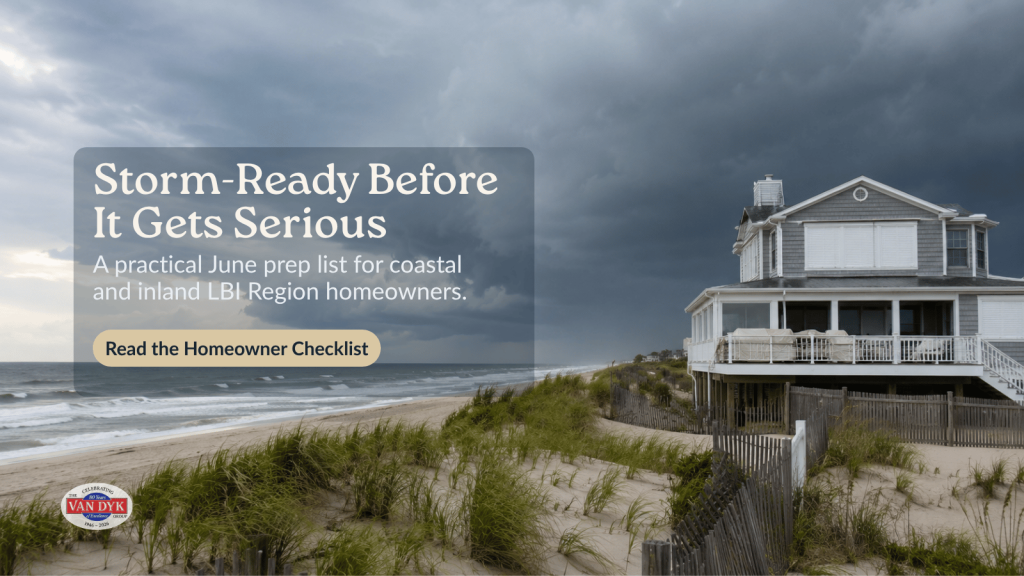
Early June is the right time for LBI Region homeowners to handle simple storm prep before coastal weather becomes urgent.
Source References
- NOAA — “NOAA predicts below-normal 2026 Atlantic hurricane season”
https://www.noaa.gov/news-release/noaa-predicts-below-normal-2026-atlantic-hurricane-season
- National Weather Service — “What to Do Before the Tropical Storm or Hurricane”
https://www.weather.gov/safety/hurricane-plan
- New Jersey Office of Emergency Management — “Hurricanes and Tropical Storms”
https://nj.gov/njoem/plan-prepare/hurricanes.shtml
- New Jersey Department of Health — “Office of Disaster Resilience: Hurricane Readiness”
https://www.nj.gov/health/er/emergency-preparedness/hurricane-readiness/
- U.S. Fire Administration / FEMA — “Carbon Monoxide Poisoning Prevention”
https://www.usfa.fema.gov/prevention/life-safety-hazards/carbon-monoxide/index.html
Last Updated on June 10, 2026