“Backs to the Refuge”: What November Buyers Should Verify Around an LBI Region Home
A home that “backs to the refuge” might catch your attention for the marsh views, birds, or distance from neighboring houses. But what does that description mean for the property you are considering? LBI refuge property checks start with finding out who owns the adjoining land and how it can be used.
November gives buyers a reason to look more closely. Hunting may be permitted on some mainland refuge parcels, while access near Holgate can differ from summer. Those details matter whether you are choosing a year-round home or a place for seasonal visits.
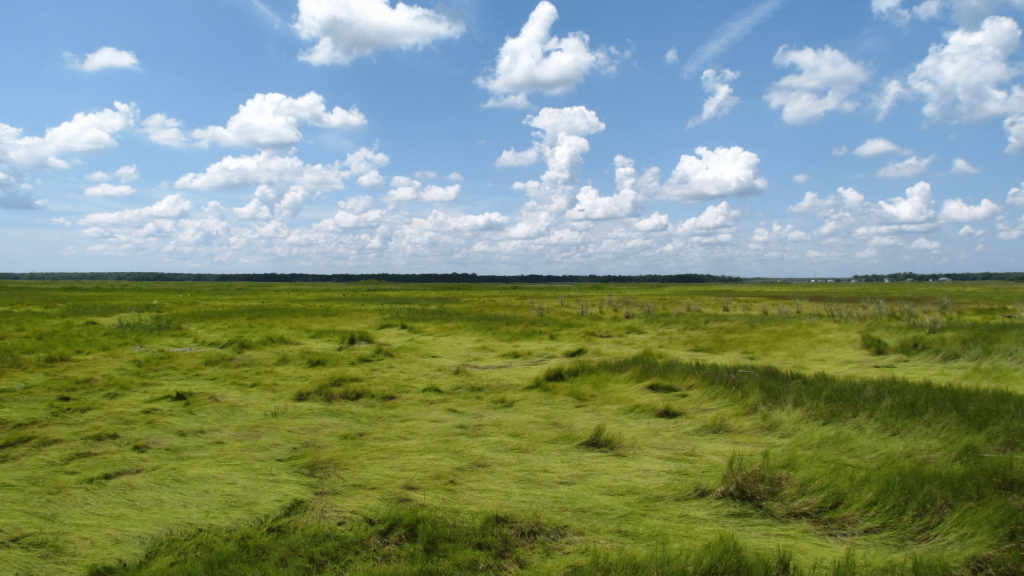
Marsh habitat at Edwin B. Forsythe National Wildlife Refuge. Photo: U.S. Fish and Wildlife Service.
Begin LBI refuge property checks with the adjoining parcel
Ask the seller or agent to identify the land behind the home. Get its municipal block and lot information, and compare parcel records with the home’s survey and official refuge maps. Trees, marsh grass, and an open view cannot tell you where ownership changes.
The Edwin B. Forsythe National Wildlife Refuge publishes maps for Barnegat and Stafford, Stafford and Eagleswood, and Little Egg Harbor and neighboring townships. Choose the map covering the address rather than relying on a general description of the area.
For example, the Barnegat and Stafford map distinguishes areas open to hunting from refuge lands closed to hunting. It also labels Manahawkin Wildlife Management Area separately. Before comparing two homes described as bordering protected land, confirm whether they border land managed by the same agency.
Ask what happens beyond the backyard
A quiet November showing gives you one afternoon’s impression. It does not establish how neighboring land is used throughout the year.
Forsythe allows hunting in designated areas under state and refuge regulations. For a mainland property near refuge land, check the current hunting map and ask refuge staff which activities are permitted on the adjoining parcel. Locate marked access points and parking areas, too.
Then consider how you would use the home. Would you spend mornings on the deck, work beside an open window, or regularly walk through the neighborhood? If privacy is part of the appeal, find out where public access is allowed near the property boundary.
Match LBI refuge property checks to your plans
Near Holgate, ask whether the refuge activities you picture are available when you expect to visit. A November walk does not establish summer access.
Holgate Beach does not allow pets. If walking your dog is part of your daily routine, that restriction changes how you should evaluate nearby recreation. Check current closures, approved entrances, and activity rules before making proximity to the refuge a deciding factor.
On the mainland, trace the route from the home to an approved trail entrance. Will you be able to walk there, or does access require a drive? Ask your attorney to review any claimed recorded access rights.
A nature view, added privacy, and convenient trail access are different features. Decide which matters most before comparing properties.
Explore homes with The Van Dyk Group. Our local team can help you compare locations and identify questions to ask about neighboring protected land.
Source references
- U.S. Fish & Wildlife Service, “Rules and Policies: Edwin B. Forsythe National Wildlife Refuge.” Updated November 3, 2026. Supports access restrictions and Holgate’s pet prohibition. View source.
- U.S. Fish & Wildlife Service, “Hunting: Edwin B. Forsythe National Wildlife Refuge.” Includes 2026–2027 hunting information and township maps. Supports designated hunting areas and checking access and parking locations. View source.
- U.S. Fish & Wildlife Service, “Forsythe North: Barnegat & Stafford Townships.” Map updated April 2025, accompanying regulations updated June 2026. Supports distinctions between hunting areas, closed areas, and Manahawkin Wildlife Management Area. View map and regulations.