Dark Earlier, Home Different: An After-Dark Check for LBI Region Homes
By late September, the path from your driveway to the front door may be dark. An after-dark home safety check helps Long Beach Island and mainland homeowners spot problems.
Wait until local conditions are safe before walking the property. If a storm may have left standing water, debris, or damaged steps or railings, make the first check in daylight. Stay out of floodwater and away from damaged structures. Once the routes you use are safe, return after dark to check visibility and everyday access.
Take an After-Dark Home Safety Walk
Go outside about 30 minutes after sunset. Start where you park and follow the route you take inside. Can you see the edge of each step? Does the gate open easily? Does the porch light reach the walkway, or just the door?
Year-round residents might picture coming home with groceries or carrying the recycling out. Seasonal owners can think about arriving on a Friday evening with luggage and beach bags. Walk those routes instead of checking only the front entrance.
Coastal After-Dark Home Safety Checks
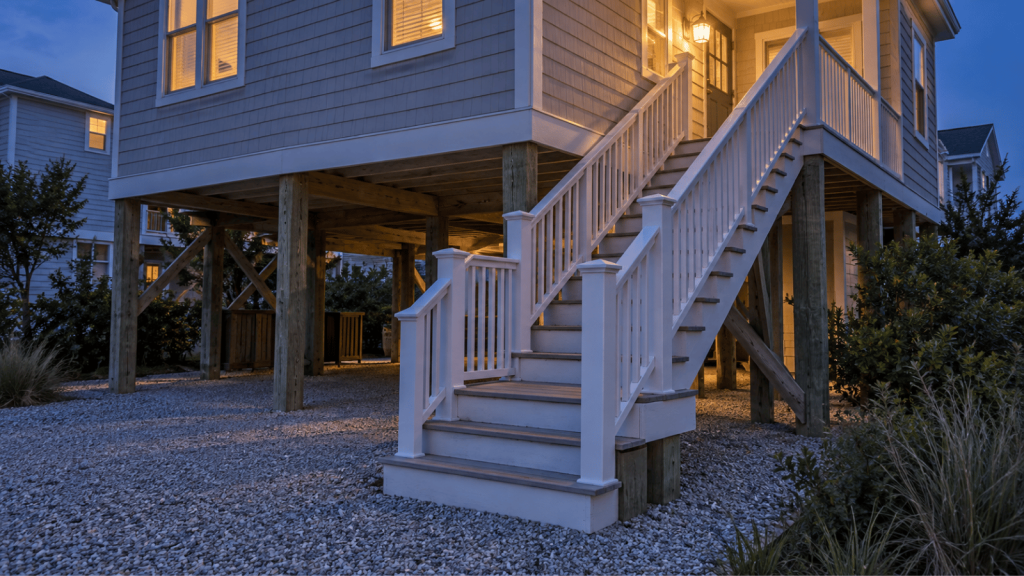
Check the route from your parking area to the entrance, including the lower steps beyond the porch light.
At an LBI home, look at the routes to elevated stairs, deck steps, side doors, outdoor showers, beach-gear storage, and under-house parking. Sand may collect at a threshold or cover the edge of a step. Move hoses, sandals, and gear away from walking paths. Check whether a gate latch is easy to find without fumbling in the dark.
If you have lagoon or dock access, note what you can see from a safe path. Do not approach an unlit edge, walk onto a dock, or inspect a damaged area at night. Arrange a separate daylight check when conditions are safe.
Mainland After-Dark Home Safety Checks
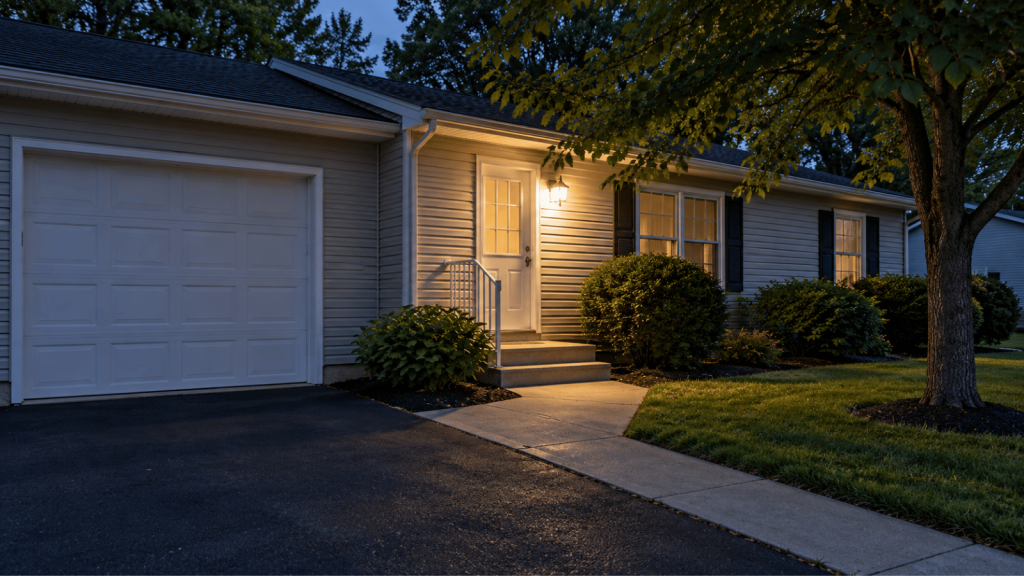
Walk the route from your driveway to the door to check where shadows obscure the path or steps.
In Manahawkin, Barnegat, Waretown, Little Egg Harbor, and Tuckerton, follow the driveway, sidewalk, garage entry, and side-door paths. Include patio steps, backyard gates, sheds, and the trash-bin area. A tree canopy can make one stretch much darker than the rest.
Look at the ground as well as the lights. Uneven pavers, loose mats, toys, cords, and plants crossing a walkway can be hard to see after sunset. Test the steps and railings people use. If a railing moves or a step feels unstable, keep that route out of use until it is repaired.
Test Lighting and Repeat the Walk
Turn on porch, garage, and pathway lights. Test motion sensors and replace burned-out bulbs. Check whether your house number is readable from the street at night, especially if a parked car or shrub blocks it. Set timers for the earlier sunset and revisit them as fall continues.
Then walk the route again. Stand where a visitor would step, not at the window looking out. If the light still leaves a dark patch on the stairs or path, adjust it before calling the job done.
If this closer look has you wondering whether the home still fits your plans, connect with The Van Dyk Group for a no-pressure conversation about listing.
Source References
Last Updated on September 30, 2026