Guests Are Still Here: A September Storm Plan for LBI Rental Owners
September can still feel like summer on Long Beach Island. Warm beach days and occupied vacation rentals often continue well after Labor Day. September is also part of Atlantic hurricane season, and coastal weather can change fast. An LBI rental storm plan should cover more than the house itself. It should also spell out what happens when guests are already staying in the property or are scheduled to arrive.
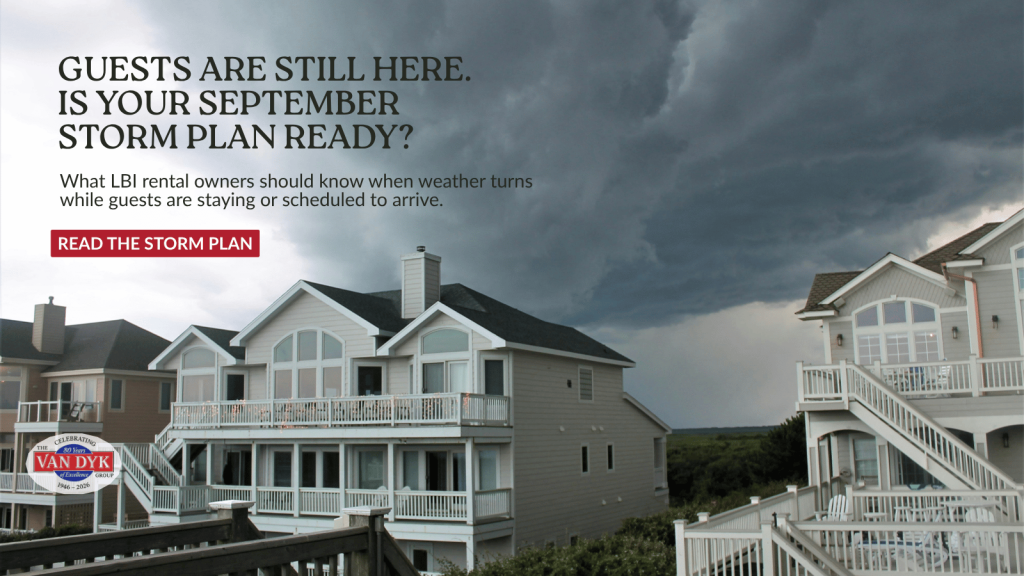
September rentals on LBI can stay busy even as coastal weather changes. This guide covers what owners should do when guests are already in place or on the way.
Build an LBI Rental Storm Plan Around Guest Communication
When disruptive weather develops, start with reliable information. Direct guests to the National Weather Service, National Hurricane Center, New Jersey emergency management, and local government alerts. Do not rely on social media posts, screenshots, or secondhand updates.
Owners should also decide who will be the main contact for the reservation. Guests need one person to call or message about the property, power outages, travel concerns, or changing conditions. That keeps communication clear when the weather is moving quickly.
Keep the storm plan where guests can find it, such as in the digital welcome information or house guide. Include the property address, primary contact, emergency numbers, and instructions for outdoor items, outages, and official weather updates.
Before winds increase, arrange to secure umbrellas, lightweight furniture, grills, trash cans, beach gear, and other loose outdoor items. Do not assume guests should move everything themselves. Tell them what they may bring inside, what should stay in place, and what the owner or local representative will handle.
Include Power-Outage Basics in Your Rental Storm Plan
A short power-outage guide can prevent confusion. Include the property address, flashlight location, utility information, emergency contacts, and any instructions specific to the home.
If the property has a portable generator, do not expect guests to figure it out on their own. Generators can create serious carbon monoxide, fire, and electrical hazards. Unless your rental procedures specifically allow safe operation by an authorized person, give guests clear outage instructions and a contact number instead.
Handle Weather-Related Arrivals Before Guests Start Driving
Upcoming arrivals require a different conversation than current guests. If heavy rain, coastal flooding, strong winds, or emergency instructions could affect travel, communicate early.
Do not promise refunds, cancellations, delayed arrivals, or extended stays before reviewing the signed rental agreement. Check the terms first. Then explain the available options in writing so both sides have a clear record.
If local officials issue evacuation or safety instructions, those directions come first. Guests should know where to find official updates. They should never be encouraged to drive through flooded roads to reach the property.
Inspect and Document Before the Next Guest Arrives
After significant weather, arrange a property check before the next guest arrives whenever conditions allow. Look for water intrusion, loose railings, leaks, damaged outdoor items, electrical concerns, and anything that could affect safe use of the home.
Take photos of storm-related damage before cleanup or repairs when practical. Keep those records separate from normal guest-related damage. Note what happened, when it was found, and what action was taken.
Weather issues are easier to manage when local rental support is already in place. Homeowners considering renting their Long Beach Island property can learn more about Van Dyk’s vacation rental services for owners: https://www.vandykgroup.com/realestatevacation/vacation-rental-services-for-owners/.
Source References
National Weather Service: Hurricane Preparedness Week, May 3–9, 2026
Supports hurricane-season timing, coastal hazards, high-wind risks, and storm-readiness guidance.
https://www.weather.gov/okx/HurricanePrepWeek
U.S. Consumer Product Safety Commission: CPSC Warns of Generator, Carbon Monoxide and Fire Hazards Ahead of Hurricane Season
May 27, 2026. Supports generator, carbon monoxide, fire, electrical, flashlight, and outage-safety guidance.
https://www.cpsc.gov/Newsroom/News-Releases/2026/CPSC-Warns-of-Generator-Carbon-Monoxide-and-Fire-Hazards-Ahead-of-Hurricane-Season
New Jersey Department of Environmental Protection and New Jersey Office of Emergency Management: Murphy Administration Kicks Off First Flood Safety Week
August 26, 2025. Supports local emergency alerts, evacuation instructions, flood safety, and avoiding flooded roads.
https://dep.nj.gov/newsrel/25_00826/
Federal Emergency Management Agency: How to Document Damages After Severe Weather Events
April 16, 2025. Supports safe reentry, post-storm property checks, photographs, videos, receipts, and damage documentation before cleanup.
https://www.fema.gov/print/pdf/node/694490
Last Updated on September 15, 2026