“Sleeps 10”… Comfortably? The Bedroom Math Guide for Groups
Planning a Long Beach Island (LBI) summer rental with a crew—two families, cousins, maybe a grandparent—takes coordination. Sleeps 10 Bedroom Math is the fastest way to pick a place that actually works for groups (and avoid drama) before you book.
Sleeps 10 Bedroom Math: “Sleeps” vs. “Works”
On paper, “Sleeps 10” often means “we can place 10 people somewhere.” However, comfort is different. In practice, it means adults aren’t on a sad pullout, kids aren’t in a wide-open loft, and nobody’s racing for the shower like it’s concert tickets.
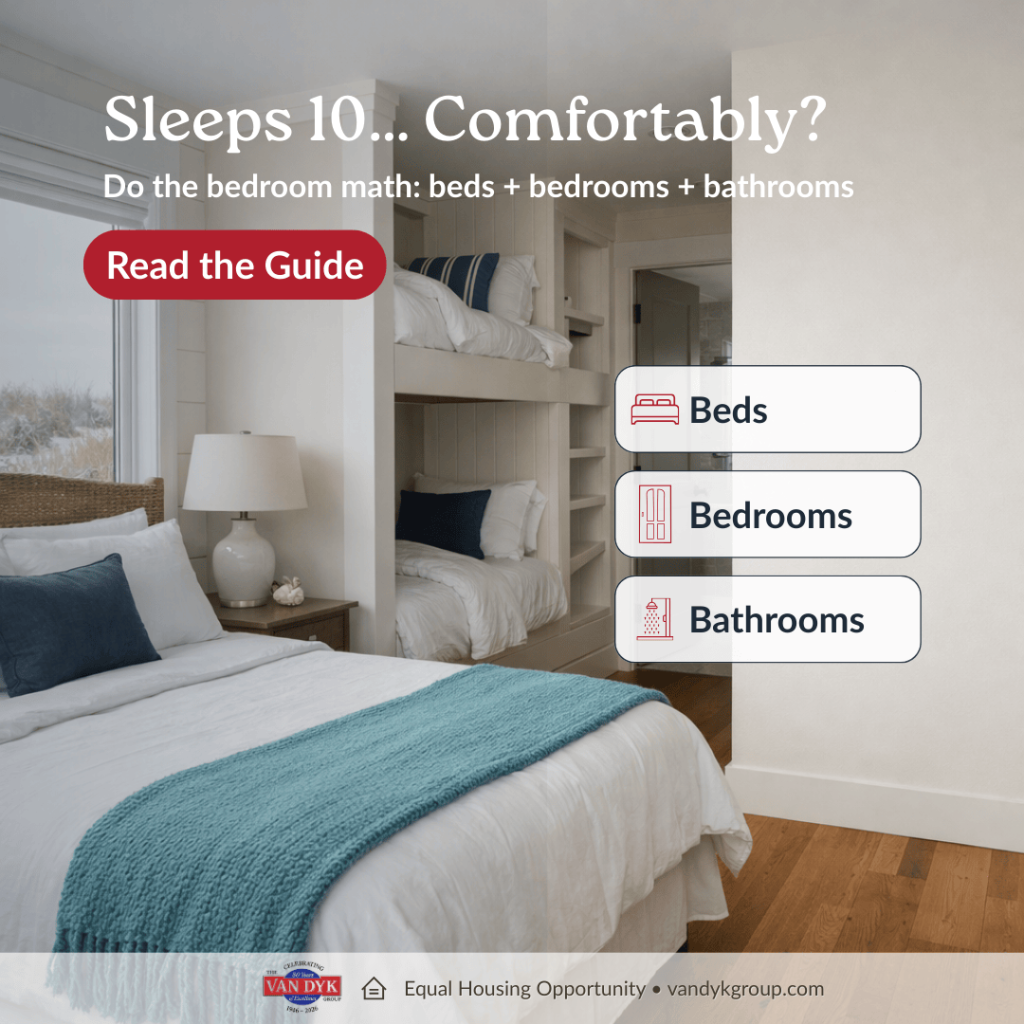
Bedroom math for groups: the 3-number rule (beds + bedrooms + bathrooms)
Before you fall in love with the view, first get these three numbers clear:
-
Beds (and sizes). Count real sleep surfaces and confirm sizes (king/queen/full/twin). Also, if bunks or trundles are included, make sure they fit your group (and your kids’ ages).
-
Bedrooms (with doors). “Den,” “bonus room,” and “loft” can be great—but don’t assume privacy if there’s no door or if it’s a pass-through space.
Bathroom reality check
-
Bathrooms (the true make-or-break). For groups, baths usually matter more than bedrooms. As a rule of thumb, 1 full bath for every 2–3 adults is “smooth,” while 1 full bath per family unit is “sanity.” Meanwhile, half baths help a lot—yet they don’t replace shower time.
That’s the core of Sleeps 10 Bedroom Math—because bathrooms are where group trips go to die.
Sleeps 10 Bedroom Math: quick “sleep count” reality check
When a listing feels “too good,” it’s usually because the sleep spaces are doing gymnastics. So ask: what counts as #9 and #10? Common add-ons include sleeper sofas, futons, daybeds in living areas, loft bunks, or “flex rooms” without doors. None of these are automatically bad—just be honest about who’s sleeping there.
Layout red flags
LBI homes are often multi-level, and certain layouts get loud fast. In particular, watch for:
-
Pullouts listed as “primary” adult beds
-
Open loft sleeping (sound carries)
-
Steep or narrow stairs (tough for toddlers or older guests)
-
One hallway bath for everyone
-
Bedrooms stacked above the main living room (light sleepers will notice)
If the photos don’t clearly show sleeping setups, then ask for a room-by-room breakdown or a simple floor plan.
Multi-family setups that actually work
The happiest group weeks usually have zones. Ideally, look for:
-
Kids’ zone: bunks + nearby bath
-
Adult zone: queen/king rooms away from the main living area
-
Quiet zone: a bedroom not next to the kitchen or TV
-
Flex space: a den for naps, remote work, or downtime
Two living areas is a quiet superpower for big groups.
The group leader checklist (so one person isn’t blamed all week)
Before you book, send this quick checklist. First, confirm the total price (including mandatory fees). Next, get the sleeping setup in writing (bed sizes + where the “extras” are). Finally, do the boring-but-important safety check: working smoke alarms and CO detectors near sleeping areas.
-
Who needs a private bedroom (and who’s fine sharing)?
-
Any stair limitations?
-
Bed size preferences (not everyone loves twins)
-
Morning routine needs (little kids, fishing crews, surfers, sleepers)
-
Shower schedule reality (tournaments, beach mornings, “we all need to be out by 9”)
Match the home to the group—not the other way around.
Want to turn the plan into a booked week? Check availability on our rentals page and filter by bedrooms and bathrooms first. https://www.vandykgroup.com/rentals/
Sources & References
Last Updated on February 18, 2026