Summer Home Energy Check for LBI Region Homes
By early August, your home has already handled weeks of heat, guests, laundry, cooking, and constant air conditioning. A summer home energy check can help Long Beach Island Region homeowners find where electricity is being wasted.
This check works for coastal and inland homes. It also applies to year-round residences, second homes, and seasonal properties.
The goal is to find equipment that is running longer than necessary, correct wasteful habits, and spot sudden changes before the next utility bill arrives.
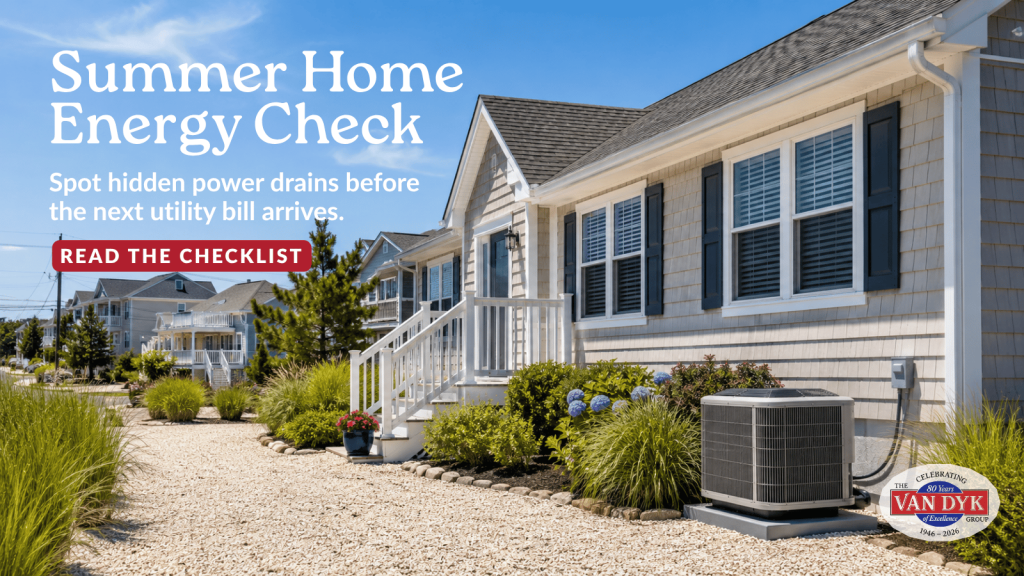
A quick summer energy check can help coastal and inland homeowners identify unnecessary electricity use before the next utility bill arrives.
Why a Summer Home Energy Check Matters in August
Do not judge your electric bill by the total cost alone. Rates, billing periods, weather, and household activity can all affect the final amount.
Compare the kilowatt-hour usage with the same month last year. Then think about how the home was used during each period.
Did more guests stay at the house? Was the thermostat set lower? Did a second refrigerator, dehumidifier, pool pump, or outdoor kitchen run more often?
A higher bill may make sense after a busy month. A sharp increase with no clear explanation deserves a closer look.
Find Hidden Summer Energy Use
Walk through the house and look for equipment that stays powered all day.
Televisions, cable boxes, game systems, printers, chargers, countertop appliances, and older electronics can use electricity while sitting idle.
Use power strips where they make sense. Do not unplug refrigerators, safety equipment, sump pumps, internet equipment used for remote monitoring, or other essential systems.
Seasonal homeowners should also review thermostat schedules and smart-home settings. Make sure each setting matches the days when the property is occupied.
Coastal Home Energy Habits to Review
Coastal homes often have large windows, sliding doors, and rooms that receive direct afternoon sun.
Close blinds or shades before the hottest part of the day. Keep exterior doors closed during busy beach-day traffic. Adjust separate cooling zones so unused rooms are not cooled to the same temperature as occupied spaces.
Review the extra appliances that run during summer.
Beverage coolers, garage refrigerators, ice makers, dehumidifiers, outdoor televisions, and charging stations can increase daily electricity use. Turn off or unplug anything that is no longer needed.
Inland Home Energy Use to Watch
Inland homes may use extra electricity in hot garages, attics, basements, workshops, pool areas, and laundry rooms.
Check pool pump schedules, basement dehumidifier settings, garage appliances, and lights in storage areas.
Run dishwashers and washing machines only with full loads. Use cold or warm water when hot water is not necessary. Decide what you need from the refrigerator before opening the door.
These habits may seem small. Repeating them every day can reduce wasted electricity.
When an Energy Check Needs Professional Help
Call the appropriate professional when electricity use rises suddenly without a clear cause.
Also get help if equipment runs constantly, lights flicker, outlets feel warm, or breakers trip more than once.
Your utility provider or a qualified energy professional may also offer a home energy assessment.
If you are thinking about your next move or want to know what your home may be worth in the current market, contact The Van Dyk Group.
Source References
- Source: U.S. Department of Energy
Title: Energy Savings Hub, June 8, 2026
Clickable URL: https://www.energy.gov/save
- Source: U.S. Environmental Protection Agency
Title: Pollution Prevention Tips for Energy Efficiency, updated September 2, 2025
Clickable URL: https://www.epa.gov/p2/pollution-prevention-tips-energy-efficiency
- Source: New Jersey Board of Public Utilities
Title: Written Testimony of NJBPU President Christine Guhl-Sadovy, April 1, 2025
Clickable URL: https://www.nj.gov/bpu/newsroom/2025/approved/20250401.html
- Source: U.S. Consumer Product Safety Commission
Title: Recalls and Product Safety Warnings, current through July 30, 2026
Clickable URL: https://www.cpsc.gov/Recalls
Last Updated on August 5, 2026